
Proper saddle fit is essential for both the comfort and performance of the hunter/jumper horse and rider. A well-fitted saddle ensures that pressure is evenly distributed, allows the horse to move freely through its back and shoulders, and helps the rider maintain correct position and balance over fences.
1. Wither Clearance
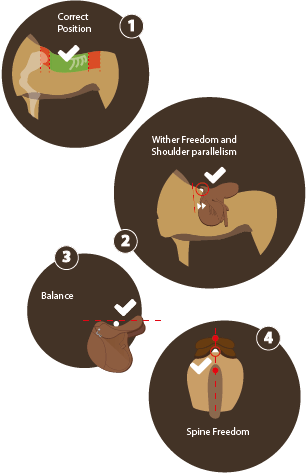
The saddle must provide adequate clearance over the horse’s withers. Ideally, there should be at least 2–3 fingers of space between the withers and the pommel when the rider is mounted. This prevents rubbing and pressure that could lead to soreness or injury.
2. Panel Contact
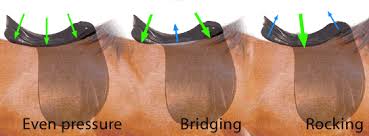
The panels (the underside of the saddle) should make even contact along the horse’s back, from front to rear. There should be no bridging (where the saddle lifts in the middle) or rocking (where it tips back and forth). Even contact ensures balanced weight distribution and prevents pressure points.
3. Gullet Width
The gullet should be wide enough to avoid contact with the horse’s spine. A properly sized gullet leaves adequate clearance on either side of the spine, allowing for free movement and preventing nerve or muscle damage.
4. Shoulder Freedom
A hunter/jumper saddle should allow the horse’s shoulder blades to move freely, especially when jumping. The points of the saddle tree should not dig into the horse’s shoulders or restrict motion. Look for a forward flap that accommodates the rider’s jumping position without interfering with the horse’s natural gait.
5. Balance and Position
The saddle should sit level from pommel to cantle when viewed from the side. A balanced saddle places the rider in a neutral position over the horse’s center of gravity, which is especially important when taking off and landing from jumps.
6. Tree Size and Shape
The tree must match the horse’s back shape—whether it’s narrow, medium, wide, or extra wide. Some horses require a custom or adjustable tree due to unique conformations such as high withers, a flat back, or a swayback.
7. Rider Fit
While the horse’s comfort is the priority, the saddle must also accommodate the rider. The seat size should support the rider without being too small (causing imbalance) or too large (leading to instability). Flap length and position should suit the rider’s leg length and style.
Regular Checks Are Essential
As the horse’s muscle tone, age, and workload change, saddle fit should be reassessed regularly—ideally by a professional saddle fitter. Poor saddle fit can lead to behavioral issues, performance decline, back pain, or long-term injury.

 Equine and Human Wellness